

From regulating metabolism to mimicking the effects of exercise on a cellular level, there are well-documented MOTS-c peptide benefits. This peptide comes from the mitochondria and has become one
of the most exciting for aging and metabolic research over the past decade.
You can buy MOTS-C peptide in Canada at 99%+ purity here at Polar Peptides, the most trusted source in Canada. Learn more about the
potential benefits of MOTS-c below.
Key Takeaways
- MOTS-c is a peptide made up of 16 amino acids.
- It may improve insulin sensitivity, enhance fat oxidation, and improve physical performance.1,2
- Some evidence suggests MOTS-c can have similar metabolic effects to exercise.
- You have less MOTS-c in circulation the older you get. Obese individuals have even less.
- Polar Peptides is the only domestic manufacturer that offers MOTS-c at 99% purity backed by lab testing.
What is MOTS-c?
It’s a mouthful – Mitochondrial Open Reading Frame of the Twelve S rRNA type-c. You can see why scientists decided to just call it MOTS-c. This 16-amino-acid peptide is encoded in the DNA of your
mitochondria, which is why it is closely connected to metabolic function.
MOTS-c was first discovered by Changhan David Lee and Pinchas Cohen at USC’s Leonard Davis School of Gerontology in 2015. It was the first peptide derived from the mitochondria with an ability to
systematically regulate metabolism.1
What really sets it apart from peptides encoded in nuclear DNA is that MOTS-c comes specifically from the 12S rRNA gene in the mitochondrial genome. Why this is particularly interesting is
because it revealed how peptide signals come from the mitochondria to influence everything from metabolism to stress response and gene expression throughout the human body.1,5
MOTS-c Peptide Benefits and Uses
There are three main areas researchers have identified potential MOTS-c peptide benefits:
Metabolic Regulation
Mice on a high-fat diet were treated with MOTS-c. They gained far less weight and showed better insulin sensitivity.1
A 2019 metabolomics study confirmed this peptide was capable of enhancing beta-oxidation while lowering three metabolic pathways that are usually elevated in obesity: sphingolipid,
monoacylglycerol, and dicarboxylate metabolism.4
This is even something we’ve seen in human observational data. Obese male children and teenagers have much lower MOTS-c levels. Lower MOTS-c levels have a negative correlation with BMI, fasting
insulin, and HOMA-IR.3
Physical Performance
MOTS-c is an exercise-induced peptide. What we mean by that is this peptide gets released during exercise. It’s actually one of quite a few peptides with this categorization. Others include CJC-1295, Ipamorelin, and BPC-157.
A 2021 Nature Communications study saw skeletal muscle levels of MOTS-c rise during exercise in humans, while exogenous MOTS-c boosted physical capacity in mice of all ages.2 Those
mice were given late-life treatment at 23.5 months and still managed to achieve measurable running endurance and grip strength gains.2
Response to Cellular Stress
Metabolic stress can be caused by exercise or illness, chronic disease, trauma, and more. It can lead to a cascade of problems, which is why this is one of the more intriguing MOTS-c peptide
benefits.
The peptide appears to translocate from the mitochondria to the cell nucleus within 30 minutes in a state of metabolic stress. It can activate NRF2-dependent antioxidant gene
expression.5 It’s the first peptide of its kind shown to actually regulate nuclear genes in this capacity.
Are There Any Risks of MOTS-c?
There’s very little published safety data for MOTS-c. What we do have is a Phase 1a/1b trial that tested CB4211- not MOTS-c itself, but an analog of the peptide. The trial consisted of 65 healthy
adults and 20 obese individuals with NAFLD. There were zero serious adverse events reported – just minor injection site discomfort, as is the case with any injectable.
We don’t see a single formal toxicology study for MOTS-c in literature, so while the benefits of MOTS-c in preclinical models appear to come without downsides, this is somewhere that we need a
bit more evidence in – specifically regarding human safety profile.1,2,4
How is MOTS-c Meant to Be Used?
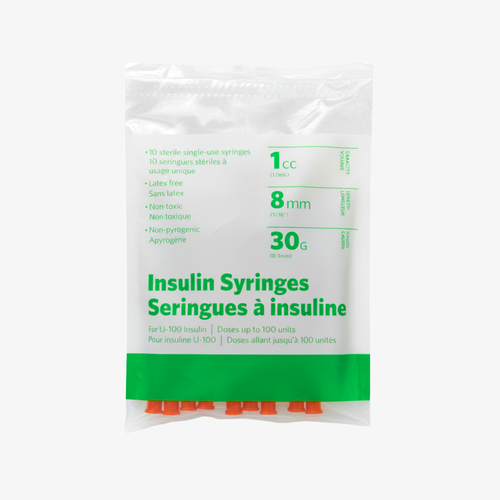
This peptide has been administered via intraperitoneal injection in published research. Doses of 5 to 15 mg/kg in mouse models.1,2
Protocols varied across studies. For example, Lee et al. (2015) practiced a sustained protocol alongside high-fat diet manipulation. Reynolds et al. (2021) looked at both daily and intermittent
schedules of 3x per week.1,2
Like the safety profile of MOTS-c, we have yet to fully establish a standardized human protocol in peer-reviewed research. Perhaps that’s why you’re interested in researching the MOTS-c peptide
benefits further yourself, hoping to come up with answers.
Can You Get MOTS-c in Canada?
MOTS-c is not a controlled substance, meaning researchers can easily source the peptide without a prescription or jumping through regulatory hoops. Polar Peptides makes it easier than ever to buy MOTS-C peptide in Canada. We’re the only domestic manufacturer capable of shipping at 99% purity backed by third-party HPLC and mass
spectrometry.
How Other Peptides Compare to MOTS-c
MOTS-c is one of many peptides with growing interest right now, as aging adults become aware of just how powerful they can be in maintaining or perhaps even improving performance despite growing
older.
Another one that gets coupled with MOTS-c often is Humanin, as it works more specifically through cytoprotection and neuroprotection while MOTS-c regulates metabolic function through
AMPK.1
The truth is, though, MOTS-c is in a really unique space in that it can do things that no other metabolic peptide can. We encourage you to order MOTS-c here at Polar Peptides to conduct your own
research and learn more about what’s possible with this peptide.
Frequently asked questions
What does MOTS-c do?
It activates the cell’s master energy sensor, AMPK. It inhibits the folate cycle and boosts AICAR accumulation (a natural AMPK activator) for a two-pronged approach.1 This is where the
many MOTS-c peptide benefits originate from – insulin-independent glucose uptake, better fatty acid oxidation, and mitochondrial biogenesis.1,4 It activates antioxidant defense genes
through the NRF2 pathway when the body is under metabolic stress, too.5
How does MOTS-c make you feel?
The research suggests this peptide can improve physical performance (strength and stamina) while potentially improving fat oxidation. It may even improve metabolic resiliency. It’s not
necessarily something you “feel,” though.
How long does MOTS-c take to work?
It depends on the change being observed in preclinical research. For example, the peptide is capable of reaching the nucleus within 30 minutes of metabolic stress to provide protective
properties.5 Physical performance gains and body weight changes could take weeks, though.2
What are the side effects of MOTS-c?
There are no known side effects offsetting the potential benefits of MOTS-c, which doesn’t mean there aren’t any. Just that there is no peer-reviewed safety profile. We have reason to believe
there are no adverse effects associated with the peptide, though, as we can draw conclusions from the CB4211 analog Phase 1 trial and the many preclinical studies across multiple labs and dosing
protocols.1,2,4
Is it legal to buy MOTS-c online?
Yes, you can purchase this peptide for research purposes right here at Polar Peptides. MOTS-c is not a controlled substance, nor does it require a prescription. Polar Peptides is the #1 supplier
online in Canada.
Why is MOTS-c different from other peptides?
Because of where it comes from. This peptide is encoded in mitochondrial DNA, whereas most research peptides are synthetic versions of nuclear-encoded sequences. MOTS-c is also the only
known peptide that translocates from mitochondria to the nucleus for direct gene expression regulation.5
Can I use MOTS-c for weight loss?
There’s plenty of pre-clinical data supporting MOTS-c for weight loss, as the evidence suggests it may prevent obesity, improve insulin sensitivity, and enhance fat oxidation.1,4 There
are also studies showing humans with less MOTS-c in circulation are more at risk of higher BMI and insulin resistance.3
Other Popular Products We Carry
Buy NAD+ Canada | AOD 9604 Peptide | GHK-Cu Peptide
References
- Lee C, Zeng J, Drew BG, et al. “The Mitochondrial-Derived Peptide MOTS-c Promotes Metabolic Homeostasis and Reduces Obesity and Insulin Resistance.” Cell Metabolism. 2015;21(3):443-454.
https://pubmed.ncbi.nlm.nih.gov/25738459/ - Reynolds JC, Lai RW, Woodhead JST, et al. “MOTS-c Is an Exercise-Induced Mitochondrial-Encoded Regulator of Age-Dependent Physical Decline and Muscle Homeostasis.” Nature
Communications. 2021;12:470. https://pubmed.ncbi.nlm.nih.gov/33473109/ - Du C, Zhang C, Wu W, et al. “Circulating MOTS-c Levels Are Decreased in Obese Male Children and Adolescents and Associated With Insulin Resistance.” Pediatric Diabetes.
2018;19(6):1058-1064. https://pubmed.ncbi.nlm.nih.gov/29691953/ - Kim SJ, Miller B, Mehta HH, et al. “The Mitochondrial-Derived Peptide MOTS-c Is a Regulator of Plasma Metabolites and Enhances Insulin Sensitivity.” Physiological Reports.
2019;7(13):e14171. https://pubmed.ncbi.nlm.nih.gov/31293078/ - Kim KH, Son JM, Benayoun BA, Lee C. “The Mitochondrial-Encoded Peptide MOTS-c Translocates to the Nucleus to Regulate Nuclear Gene Expression in Response to Metabolic Stress.” Cell
Metabolism. 2018;28(3):516-524. https://pubmed.ncbi.nlm.nih.gov/29983246/ - Fuku N, Pareja-Galeano H, Zempo H, et al. “The Mitochondrial-Derived Peptide MOTS-c: A Player in Exceptional Longevity?” Aging Cell. 2015;14(6):921-923. https://pubmed.ncbi.nlm.nih.gov/26289118/